
Home > News
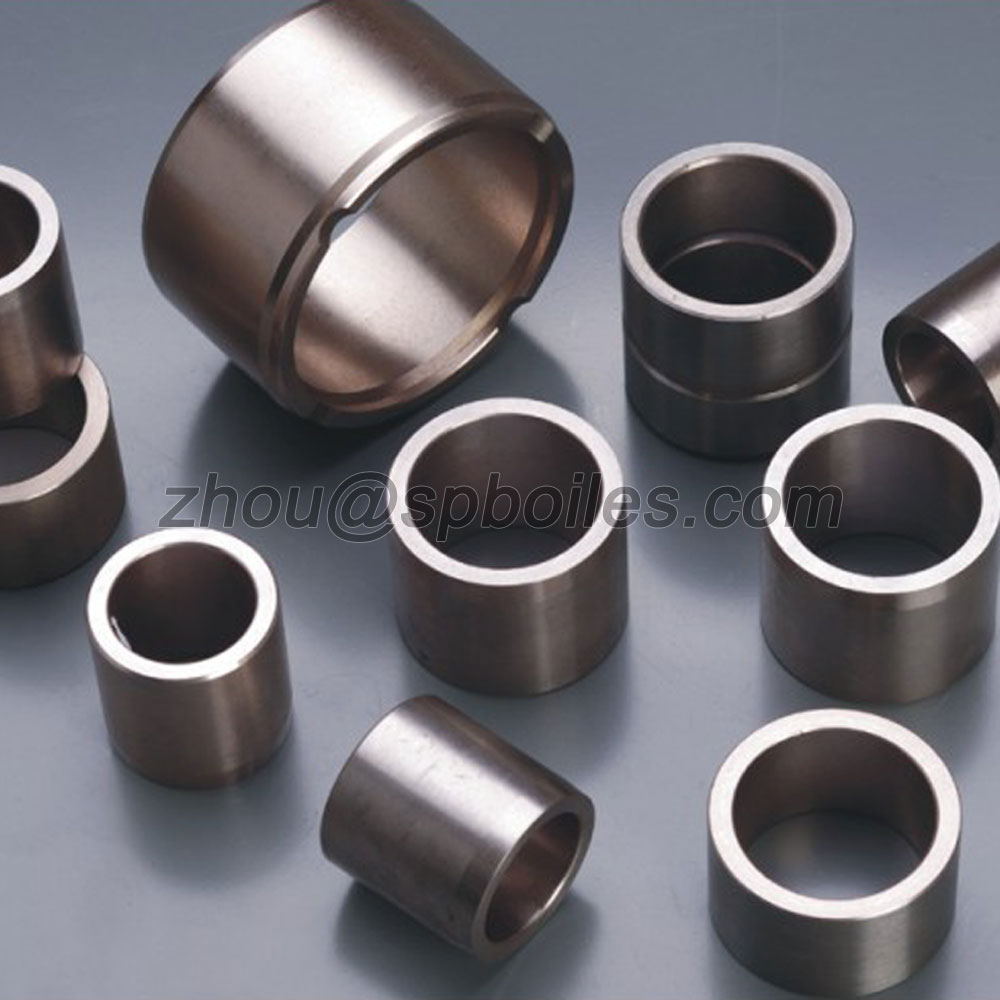
The engineering community increasingly recognizes powder metallurgy (PM) as an new manufacturing technique for creating high-quality, net-shape components, a trend noted in the 2025 State of the PM Industry report. This includes established methods like conventional press and sinter, which are essential for producing precision bearings. In hydraulic and pneumatic systems—encompassing pumps, actuators, valves, and cylinders—these sintered components, particularly bronze and iron-graphite bearings, are specified for their ability to handle moderate speeds under high loads. The inherent porosity of sintered metals allows for oil retention, providing self-lubrication critical in demanding fluid power environments.
Sintered bearings are categorized as iron-based or bronze-based, with applications requiring a high level of sliding performance, such as in hydraulic pump bearings and pneumatic actuator bushings, often utilizing bronze materials. According to industry publications, bronze-based sintered bearings are widely used in automotive electrical components, a principle that transfers directly to the precise, repetitive motion found in hydraulic valves and cylinder guides. Copper-infiltrated, bronze-based bearings, conforming to standards like MPIF FC-0200 and DIN SINT-B11, offer enhanced strength, wear resistance, and thermal conductivity. These properties directly address common failure modes like galling and heat buildup in confined spaces.
The broader sintered metal product market is navigating a major period driven by key trends that impact component selection for industrial machinery. A primary trend, as highlighted in recent market analyses, is the escalating demand for lightweight and high-strength components, largely fueled by the automotive industry's pursuit of fuel efficiency. This push for advanced materials like high-strength steels enables the production of strong yet lighter parts, a benefit for mobile hydraulic equipment where weight savings translate directly into operational efficiency. Furthermore, the hydraulic systems market represents a significant focus for top powder metallurgy manufacturers, who supply critical valve bodies, pump components, and actuator parts.
In practical terms, the selection of sintered steel bearings for hydraulic and pneumatic systems is a calculated engineering decision aimed at solving specific reliability challenges. Their use in gear pump bearings and compressor bearings, where loads are high and lubrication can be intermittent, demonstrates their strongness. The material's ability to be manufactured to net-shape ensures consistent performance and reduces the need for secondary machining, improving supply chain flexibility—a benefit underscored in discussions about PM-HIP (Powder Metallurgy-Hot Isostatic Pressing) as an alternative to traditional casting. For engineers, specifying these bearings means addressing the root causes of failure through integrated lubrication and superior wear resistance. We provide a range of these high-performance bearings designed to meet the exacting standards of modern fluid power systems.
Contact: Sales Department
Phone: 13974953910
Tel: +86 731 84477600
Email: [email protected]
Add: Houtang Inustrial Area,Genglou Street,Jiande,Zhejiang,China