
Home > News
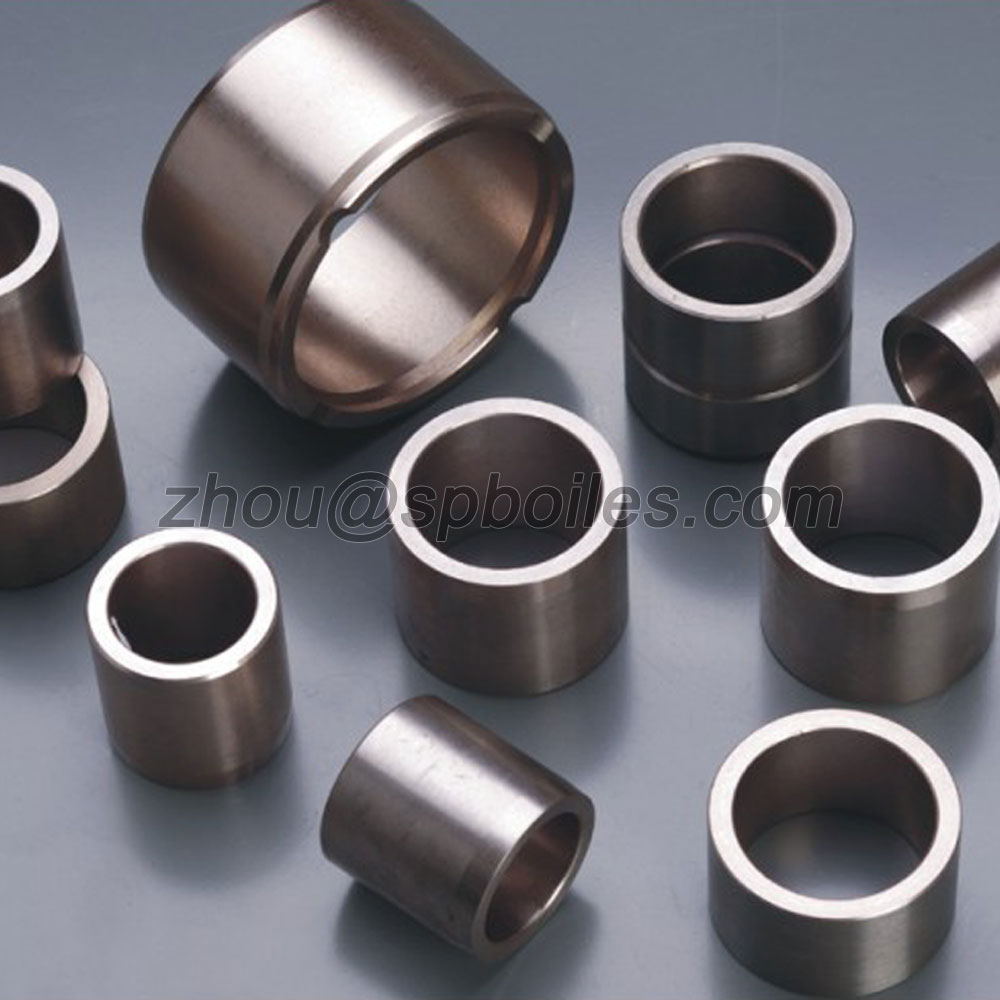
Hydraulic and pneumatic systems present a unique set of challenges for bearing and structural components, including high dynamic loads, shock, and continuous operation in fluid environments. According to industry reports, a primary driver for material selection in these systems is the need for components that can withstand these stresses without catastrophic failure. This has led to a significant shift towards advanced sintered materials that offer a balance of toughness, dimensional stability, and manufacturability for complex shapes like valve guides and gear pump bearings.
Recent data shows that materials conforming to standards like MPIF FN-0200 and DIN SINT-C30 are increasingly specified for critical structural roles. A key development is their classification as heat-treatable, quench-hardenable grades. This capability allows engineers to tailor the final hardness and core toughness of a component, such as a pneumatic actuator bushing or cylinder wear ring, to precise application requirements. The nickel alloying, typically in grades like FN-0205-K28, significantly enhances toughness and impact resistance compared to standard sintered irons, which is critical for components subjected to pulsating pressures and shock loads common in hydraulic pumps.
Field data and industry analysis consistently highlight specific performance takeaways. For instance, in compressor bearing applications, the excellent toughness of nickel-alloyed sintered steels like JIS SMF 5030 directly correlates with extended service life under high-load, moderate-speed conditions. This is a practical consideration that moves beyond basic wear resistance to address root causes of failure like crack propagation. Furthermore, the inherent porosity of sintered materials can be leveraged for self-lubrication or oil impregnation, a beneficial trait for components in closed hydraulic systems where initial lubrication is important.
The evolution of system designs toward higher pressures and compact footprints is a major factor driving material selection. Industry updates indicate that traditional materials often reach their performance limits in these new environments. The structural grade nature of these nickel-steel sintered components allows them to function not just as simple bearings but as integrated structural elements within pumps and actuators. This dual functionality simplifies assembly and improves overall system reliability, making materials like DIN SINT-D30 a foundational choice for engineers designing the next generation of fluid power systems.
We provide a range of these high-performance sintered components tailored for demanding hydraulic and pneumatic applications.
Contact: Sales Department
Phone: 13974953910
Tel: +86 731 84477600
Email: [email protected]
Add: Houtang Inustrial Area,Genglou Street,Jiande,Zhejiang,China