
Home > News
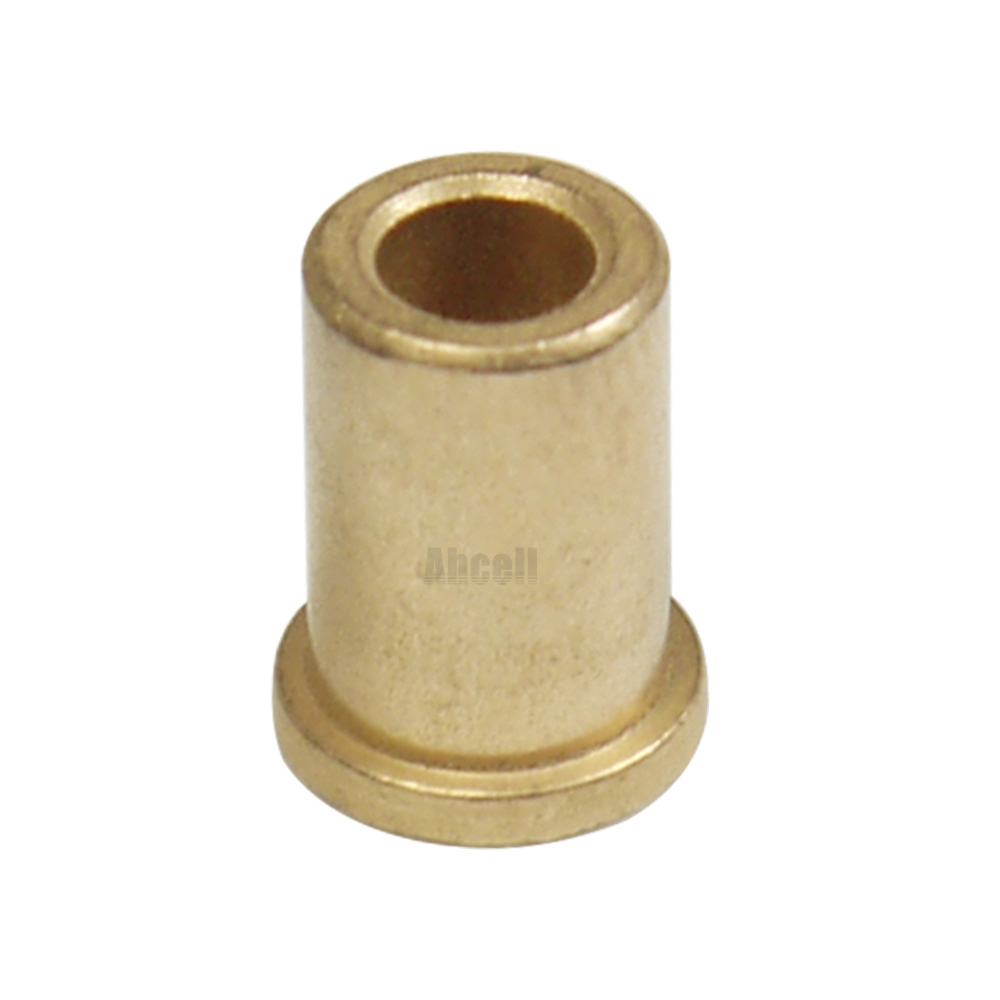
Oil-impregnated sintered bronze bearings, manufactured to standards like ASTM B438 and MPIF CT-1000, are a staple in industrial design. They are produced by compacting a mixture of bronze powder, typically 90% copper and 10% tin, and then sintering it in a controlled atmosphere furnace at temperatures around 815°C (1500°F). This process fuses the particles, creating a solid matrix with a network of interconnected pores. The part is then vacuum-impregnated with a lubricating oil, which is held within these pores by capillary action. The result is a self-contained lubrication system that channels oil directly to the interface between the shaft and bearing during operation.
Traditional grease or oil bath lubrication requires regular maintenance and carries a risk of leakage. Self-lubricating bearings directly address these problems. They eliminate the need for external grease points and reduce environmental concerns related to lubricant disposal. This built-in functionality is a primary reason for their adoption in enclosed or hard-to-service assemblies. The oil reservoir typically constitutes 15% to 25% of the bearing's total volume by weight, providing a long service life without external intervention.
The electrical and electronics sector relies heavily on these components for miniaturized devices. Industry reports note their extensive use in small electric motors, actuators, and ignition coils. Their heat-treatable nature and high toughness provide durable, self-lubricating solutions for precision mechanisms. Common applications include bearings in relays and switches, pivot points in sensors, and bushings in encoder assemblies. A specific trend is their use in brushless DC motors for computer cooling fans and automotive seat adjusters, where quiet operation and minimal particulate generation are required.
Performance is dictated by material standards. ASTM B438 defines mechanical properties like radial crushing strength and density, while MPIF CT-1000 specifies chemical composition and oil content. Engineers select bearings based on factors like static load capacity, which can exceed 70 MPa for some grades, and PV (pressure-velocity) limits. A current industry trend involves tailoring porosity and pore size to specific synthetic lubricants for extreme temperature ranges, from -40°C to 150°C. This extends their use into automotive under-hood sensors and outdoor telecommunications equipment.
The fundamental technology behind these bearings is not new. It was originally developed nearly a century ago to solve a specific automotive clutch problem. The solution proved so effective it found global use across all industrial sectors. Today, these bearings are still specified for electric motors, aviation systems, escalators, and even thermal imaging cameras. Their design principle shows no sign of becoming redundant. Modern Powder Metallurgy allows for near-net-shape production, reducing waste and cost compared to machining solid bronze. This economic factor, combined with the performance benefits, secures their place in new designs for IoT devices and portable medical instruments.
We supply these oil-impregnated sintered bronze bearings for engineers designing reliable, low-maintenance electronic systems. The consistent performance defined by long-established material standards makes them a practical choice for both prototyping and high-volume manufacturing.
Contact: Sales Department
Phone: 13974953910
Tel: +86 731 84477600
Email: [email protected]
Add: Houtang Inustrial Area,Genglou Street,Jiande,Zhejiang,China